
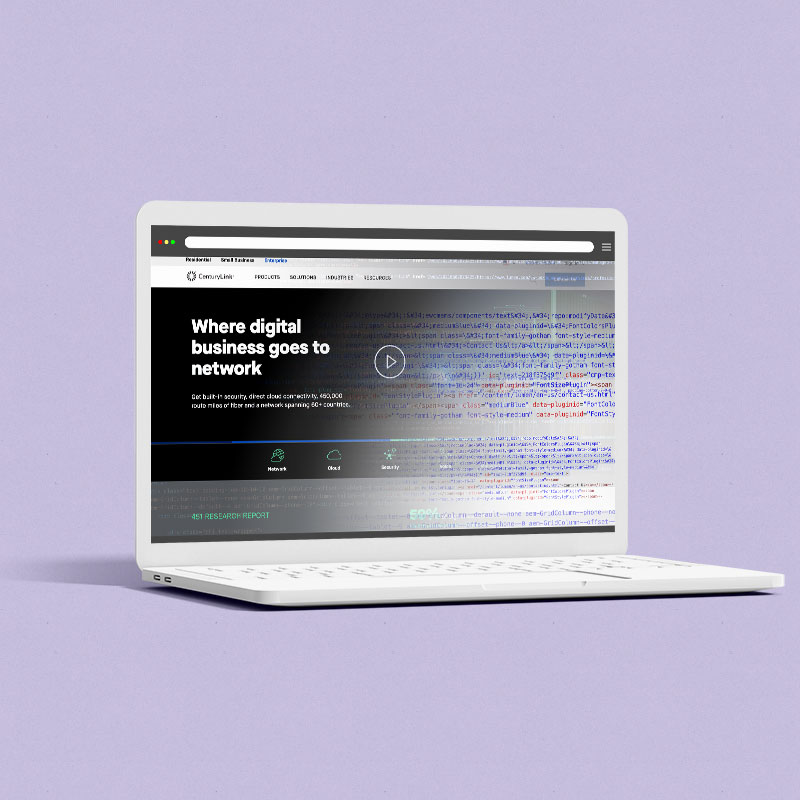
When I started at CenturyLink (CTL) in 2019, it had a pretty solid website already running. The home page served as a gateway to both the residential and enterprise business units, with the latter being my primary focus as Manager of Digital Design. These two business units were visually differentiated: bright, welcoming imagery for residential versus a darker, 'night time' aesthetic for enterprise. The site was built in Adobe Experience Manager (AEM), a comprehensive content management and digital asset management platform, and processes were in place to make edits and updates to the site.
Designers would create comps in Photoshop or XD and submit them into what felt like a "black box" where we hoped the web team would execute our creative vision, but there was no real dialogue or active collaboration.
To work together, web development managers and team leaders and I had to get to know each other. Because we had no dedicated collaborative process, finding the right people was a challenge. I needed to understand the web team's structure and responsibilities for AEM Developers, Authors, and team leaders.
I started with meet-and-greets with web development managers and team leaders. These helped me to identify the knowledgeable and decision-making players. From here, I organized formal governance meetings and started a dedicated Teams channel with hands-on designers, developers, and Authors. I drove the purpose and attendee list for these meetings. When discussions veered into irrelevant topics, I kept us on track. When important voices were being overlooked—particularly women in design and UI/UX—I made sure they were heard, even when that meant navigating egos. Others helped give the meetings shape and eventually led some of them, but I maintained the strategic direction through continuous improvement iterations. Project Managers created status tracking; meeting invites were refined to ensure the right attendance; and AEM Developers and Authors added designers to their review processes.
To help the Creative team understand the web better, I expanded web page design tasks to the whole team and created a continuous learning program that I personally delivered over six years. Topics evolved from foundational HTML/CSS and responsive design principles to advanced tools like Figma and animation frameworks—transforming a team with zero technical knowledge into designers who could prototype interactions and push back on "impossible" with working code.
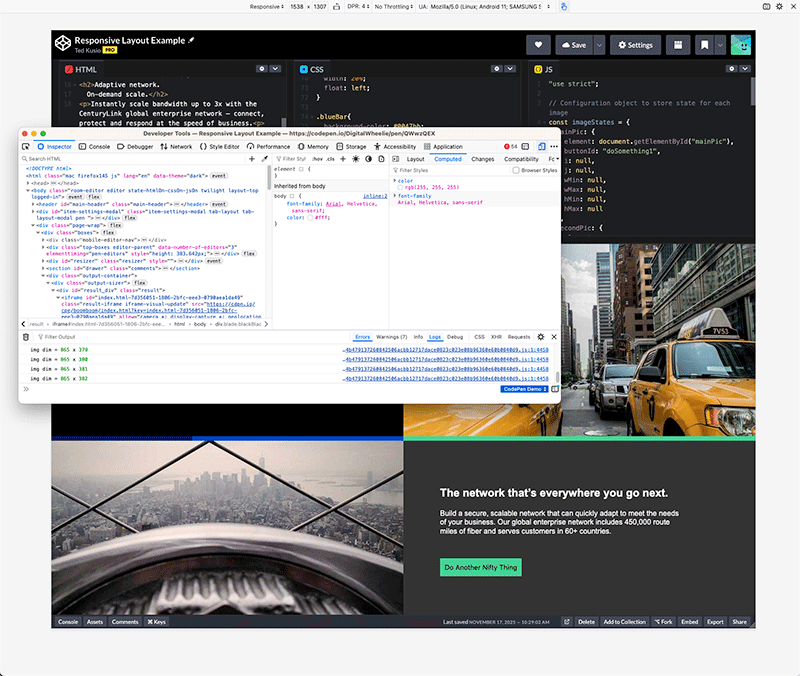
I also worked directly with AEM Developers when they dismissed requests as too difficult, even for relatively simple features. This required diplomacy because I was an outsider coming into their domain to say "do it this way instead." So in addition to humanity, patience and understanding, I approached them with actual working demos built in CodePen, which I also shared with Authors for context. I gave the dev team the tools to build smarter and more efficient solutions; I showed designers how to create more engaging layouts—but without my vision, persistence, and legwork, it wouldn't have happened.
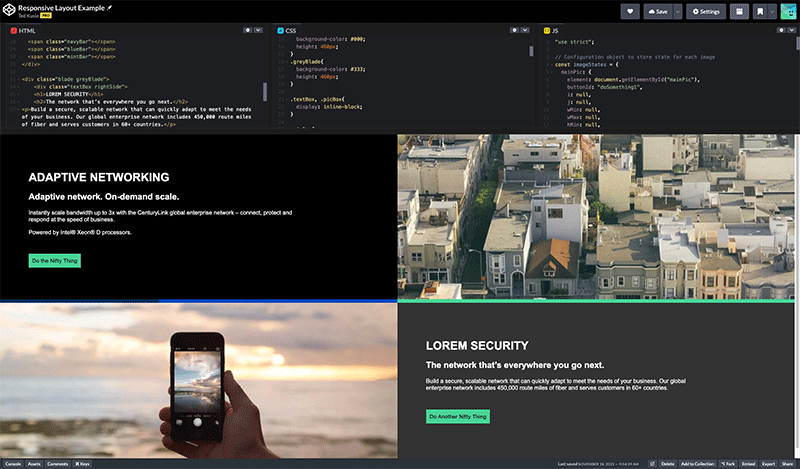
Showed how CSS "float" could make mobile content stack consistently so images matched their corresponding copy.
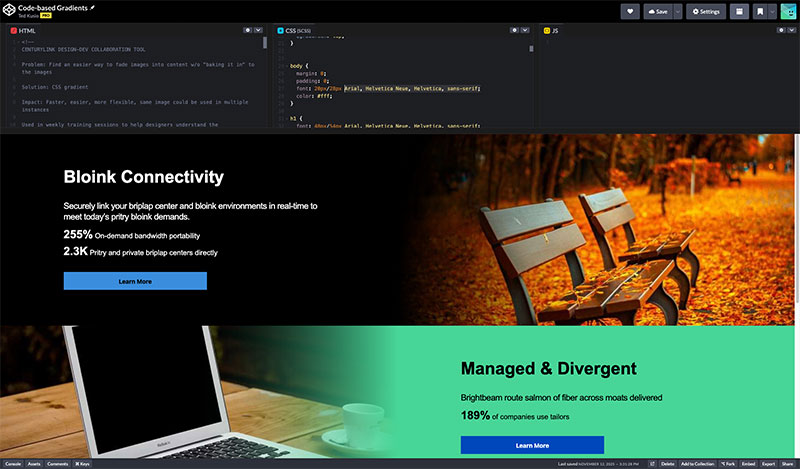
Demonstrated CSS gradients instead of editing images directly, enabling quick directional changes and color swaps.
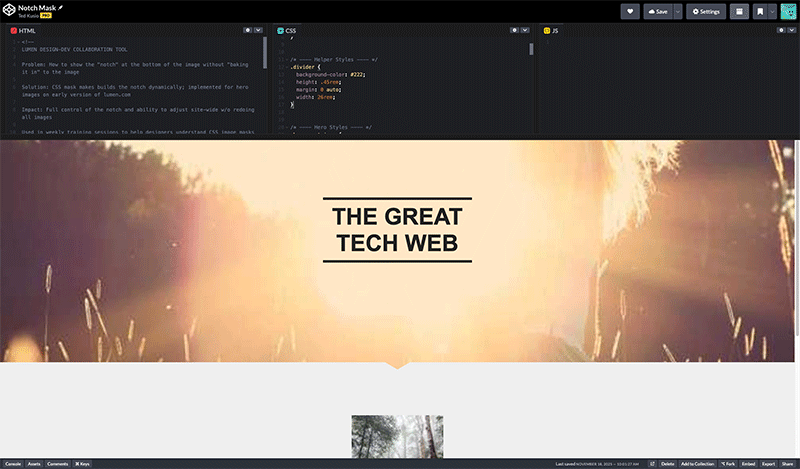
Showed how CSS could create the signature Lumen "notch" design element without manually editing each image.
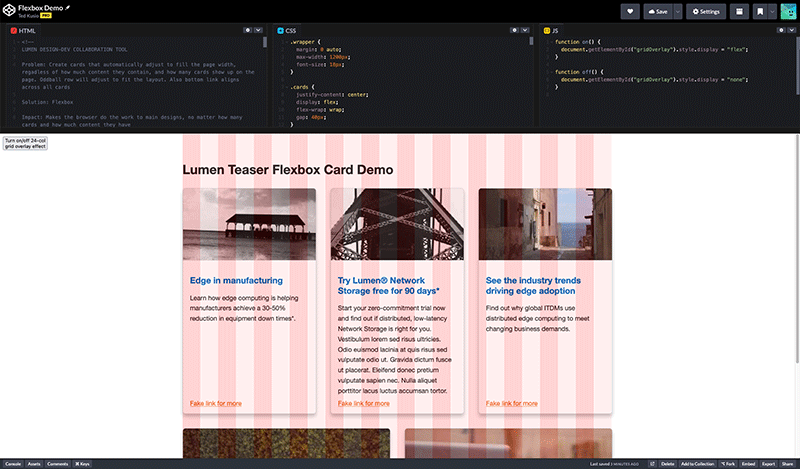
We needed dynamic card layouts that automatically adjusted to the number of cards and browser width. I introduced them to flexbox with a CodePen demo that showed the exact behavior we needed.
I identified that we needed designers who could bridge the creative and technical worlds. I intentionally hired two "unicorn" visual designers with coding experience and pursued interns with clear interactive interests and skills.
These hires transformed what our team could deliver. When we hit a major roadblock trying to integrate ION interactive content directly into our pages—and dev said it was impossible—I didn't accept that answer. I directed these two technical designers I'd hired specifically for challenges like this to investigate a solution. I assigned work based on their interests and skills, helped them overcome obstacles (both managerial priorities and technical roadblocks), and gave them time and air cover to experiment. When one of them cracked the code, I championed the solution with leadership and ensured dev implemented it. I celebrated their achievements to leadership and nominated them for awards with detailed explanations, because sometimes creative leadership didn't grasp what a big deal they'd solved.
One built the interactive solution finder currently on Lumen's homepage—the AEM Developers simply dropped his code into an AEM component and it runs perfectly. The other introduced Lottie animation formats and new interactive capabilities. These weren't just positions filled—they were force multipliers who elevated the entire team's technical capability.
The challenge: We wanted to integrate ION (third-party content experience platform—ioninteractive.com) directly into AEM pages, instead of always linking to stand-alone ION pages. The dev team said it couldn't be done—ION and our CMS weren't compatible.
The solution: When dev said ION integration was impossible, I didn't accept that answer. I directed the two technical designers I'd hired to investigate. After experimentation and testing, one cracked the code.
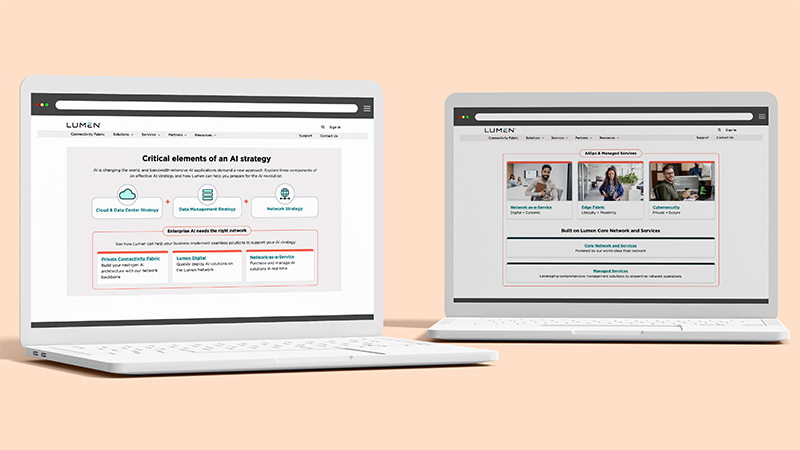
The culture and technical capability I built unlocked features that were previously impossible. When leadership wanted sophisticated interactive elements like card carousels, I worked directly with both Creative and dev to design solutions, prototype interactions in CodePen, and guide implementation.
The collaborative foundation and technical literacy enabled sophisticated site personalization—impossible with the old "black box" approach. An example is the landing page for the Lumen Channel Partners program, featuring pages with custom content for potential new partners, or active or dormant partners.
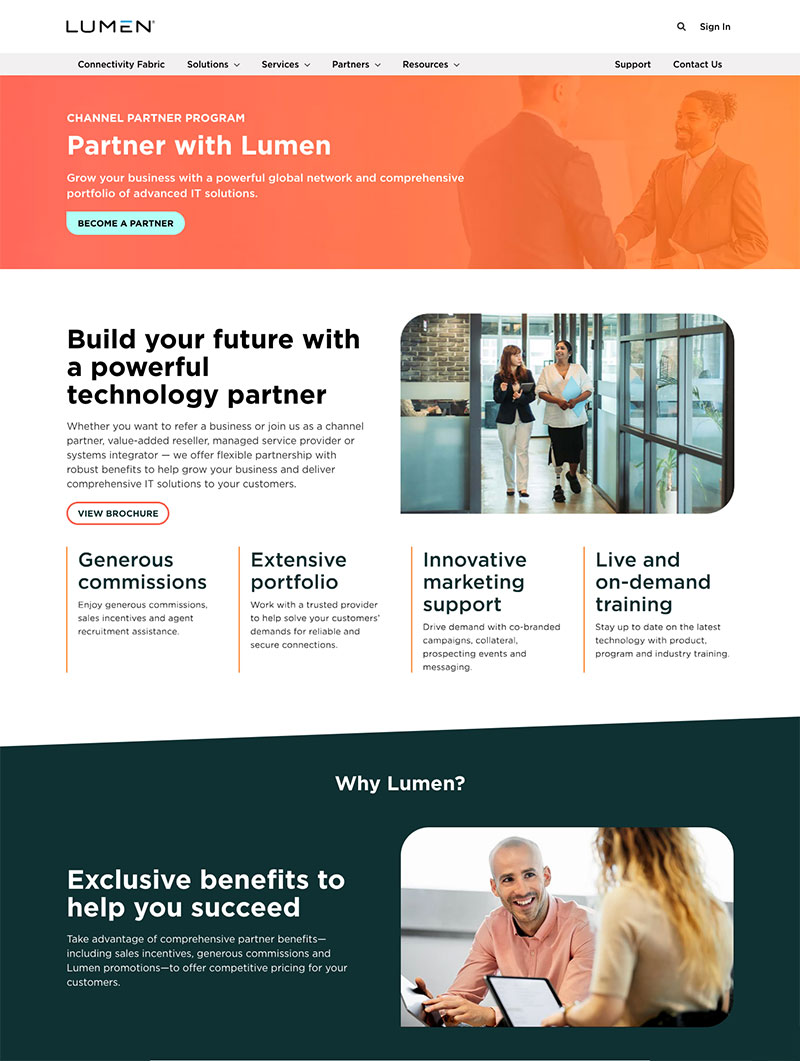
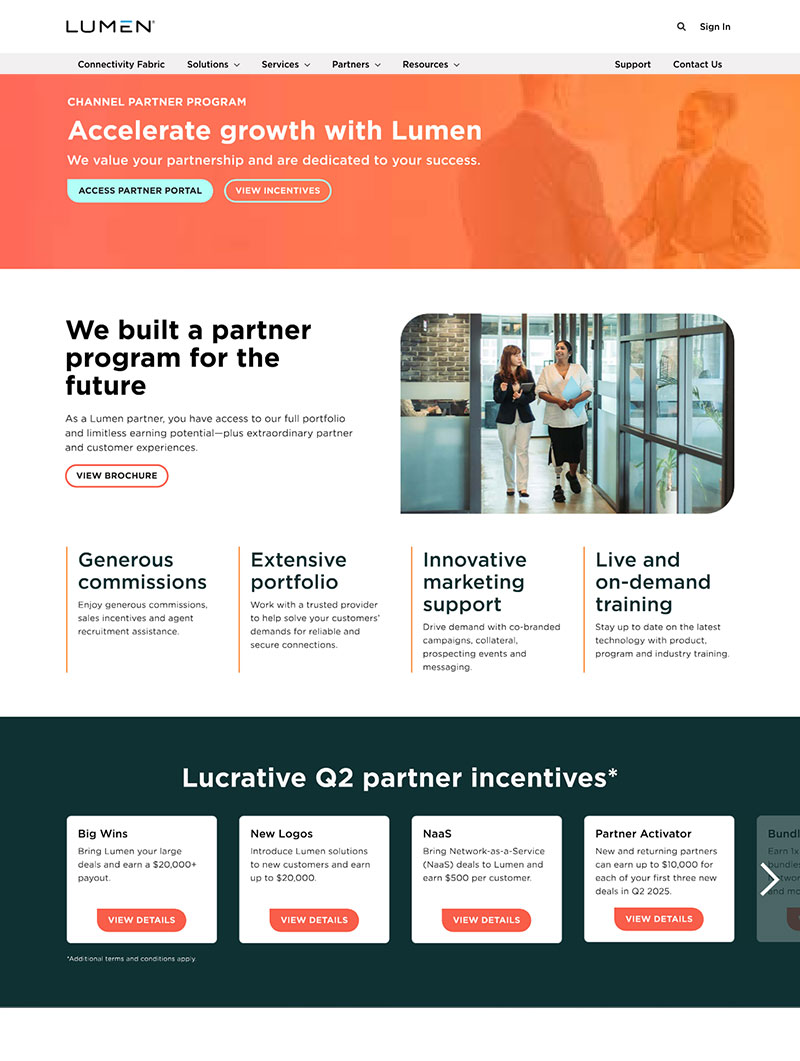
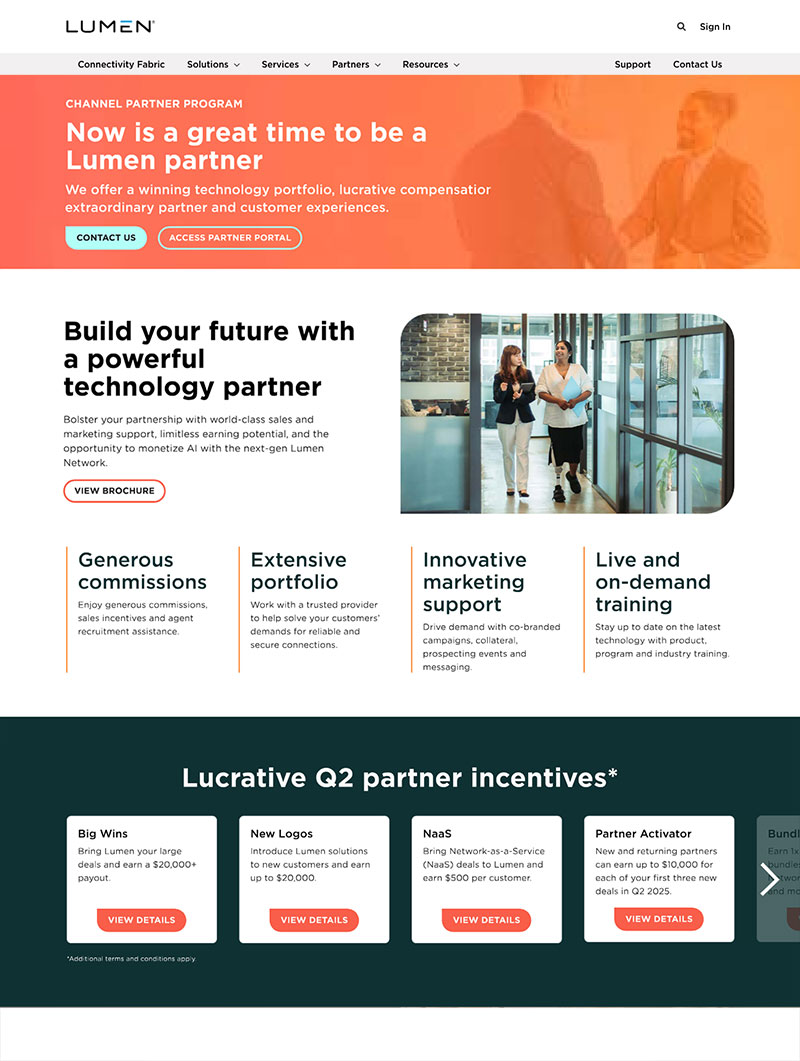
This allowed us to invite visitors not part of the prohram with benefits, get partners who haven't logged in recently excited about the Partner Program again, and get active partners to the partal as quickly as possible.
Speed: Corrections went from weeks to days; designers could make minor updates without dev tickets; faster iteration meant better final designs
Capability: Complex technical integrations (like ION) became possible; team could prototype sophisticated interactions; reduced dependency on external agencies
Quality: Designs that actually worked on real devices; fewer "impossible to implement" surprises; better alignment between design vision and technical execution
By the time I led the team through the major rebrand initiatives, we had:
The foundation I built enabled Lumen to: